Bedwars: The Origin FI

Chapter

Economy: currencies, generators, shop, team upgrades and a custom inventory

In Bed Wars (a team game in which every team defends its own bed and tries to break the others' beds), all gear is bought with currencies produced by generators in the bases and on separate islands. This chapter describes how the economy of Bedwars: The Origin was built on top of Fortnite: four currencies, generator piles written in Verse, the shop and its payment architecture, team upgrades and traps, chests, and a fully custom Minecraft-style inventory drawn on top of Fortnite's own hotbar. The economy is the backbone of the game: if a generator, a purchase or the inventory fails, the whole match stops progressing.

Starting point: four currencies and Fortnite's devices

The game has four currencies. Iron and Gold come from the team's own base generator and buy basic goods such as blocks, swords and tools. Diamonds come from the four diamond islands and buy upgrades and traps that affect the whole team. Emeralds come from the centre island's generators and are the currency for the most expensive goods, such as Crystal gear and potions. Technically the currencies are Fortnite resource items (types 200–203 in the inventory code), so their amounts are read through Fortnite's payment devices.

According to the design documents, the shop, team upgrades and traps already existed before the first Claude Code session. At that time purchases were handled with Fortnite's Conditional Button devices (a conditional button that charges the player a set amount of an item), each price had its own device, buying required a living player, an open shop and a distance of under 4.5 metres from the vendor, the hotbar had nine slots, and Fortnite's own Item Spawner devices served as generators. Verse is Epic's programming language in which game logic is written in the UEFN editor (Unreal Editor for Fortnite), and devices are the editor's ready-made game components. Almost all the systems in this chapter were rewritten in September–October so that Verse handles the logic and devices are used only for what Verse cannot reach, such as charging a payment.

The look of the currencies changed twice along the way. The first icons were ingots and cut gems, but in October it was noticed that the hexagonal emerald and angular diamond resembled Minecraft's silhouettes. In the new icons iron and gold stayed as ingots, and the diamond and emerald became raw crystals. In the 20 October copyright pass the diamond was tinted deep sapphire blue and the emerald dark jade, in the icons, the generators' gems and the map blocks alike. The names Iron, Gold, Emerald and Diamond were allowed to stay because they are common words, not Minecraft proper names.
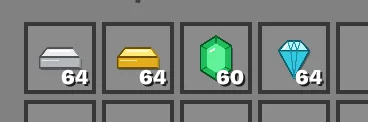
The inventory's old currency icons: iron and gold ingots, a green hexagonal emerald and a blue cut diamond. The emerald and diamond shapes were too close to Minecraft's items, so they were later redrawn.
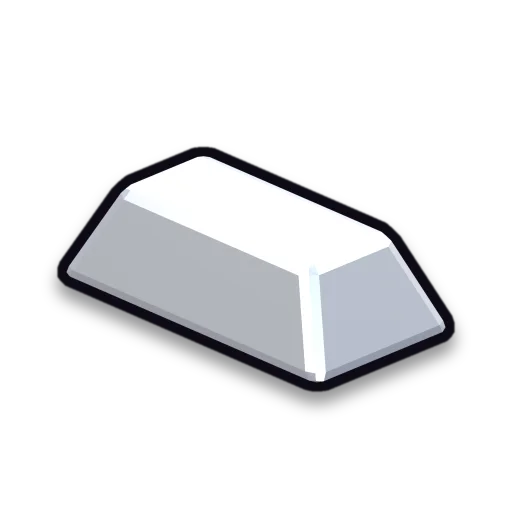
Final iron icon: a pale ingot with a dark outline and a soft shadow. The icon is rendered with the Blender script build_shop_icons_v2.py.
Final gold icon: the same ingot shape in gold, with a sparkle.
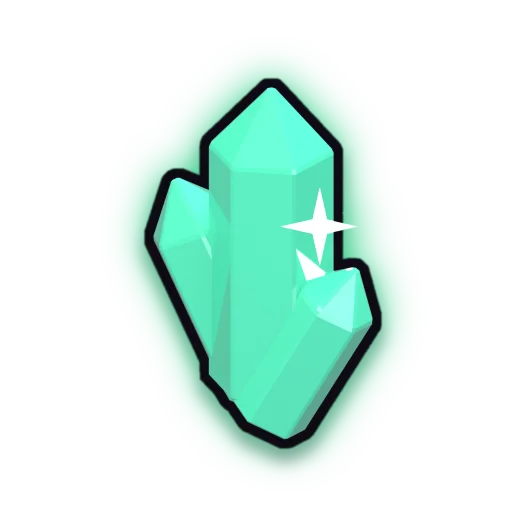
Final emerald icon: a cluster of jade-green raw crystals in place of the old hexagonal gem.
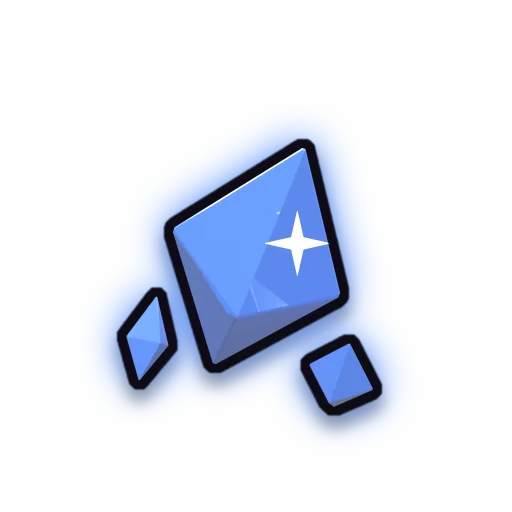
Final diamond icon: sapphire-blue crystal shards in place of the cut diamond.

Shop architecture: purchase tickets, dynamic prices and a single speed-effect slot

On 29 September a broad audit was made of all shop items and upgrades against the rules of Minecraft 1.8.9 and Hypixel Bed Wars. A total of 52 agents took part, from seven different perspectives. The most significant finding concerned movement-altering devices: all of Fortnite's movement modulator devices share one and the same effect slot, and effects do not stack. The sneak system (shift_sneak, Minecraft's crouch-walk that prevents falling off an edge) kept the slot occupied all the time, so the Speed potion, the Counter-Offensive trap and water slowdown had never worked. The fix was to make shift_sneak the sole owner of the slot, to which the other systems report their speed buffs. The Speed modulator multiplier became 1.764, i.e. the game's base speed of 1.26 multiplied by the Speed II multiplier of 1.4.

Purchases were rebuilt around purchase tickets (bw_ticket). The price is set on the payment button (conditional_button_device, SetItemCountRequired) right before payment, and the item is granted only once the device confirms the payment. An open ticket blocks a new purchase, so even a late payment finds the right purchase. The team upgrade lock is held until the ticket closes, so the same tier is not bought twice. An already owned upgrade is refunded, and if the payment is confirmed while the player is dead, the refund is given on the next spawn. Refunds go through the same Item Granter devices as the practice mode currencies. Diamonds got their own DiamondGrant field, because device array elements could not be wired through MCP. MCP (Model Context Protocol) is the interface through which the AI agent controls the UEFN editor.

The next day all 46 payment buttons were checked: they were wired correctly and had the right amounts. Even so, several purchases felt broken in playtesting. The cause was lack of feedback, not logic, so an effects row, golden extra health and large notices were added to the HUD (see the HUD section). When the void was deepened on 1 October, 57 payment buttons had to be moved out of the fall path, because they showed up as clutter floating under the map.

The shop's colour scheme was redone on 20 October. Out of four options, theme A (Royal Castle) was chosen: a dark blue or violet background, gold borders, the open tab filled with gold, and on each card a stripe and price colour matching the currency. Colour blindness influenced the choice. The most common red-green colour blindness does not hinder telling blue from yellow, the brightness contrast is large, the selection is shown as a thick border, and the currency and states (OWNED, MAXED, QUEUE FULL, FULL) are also given as text.

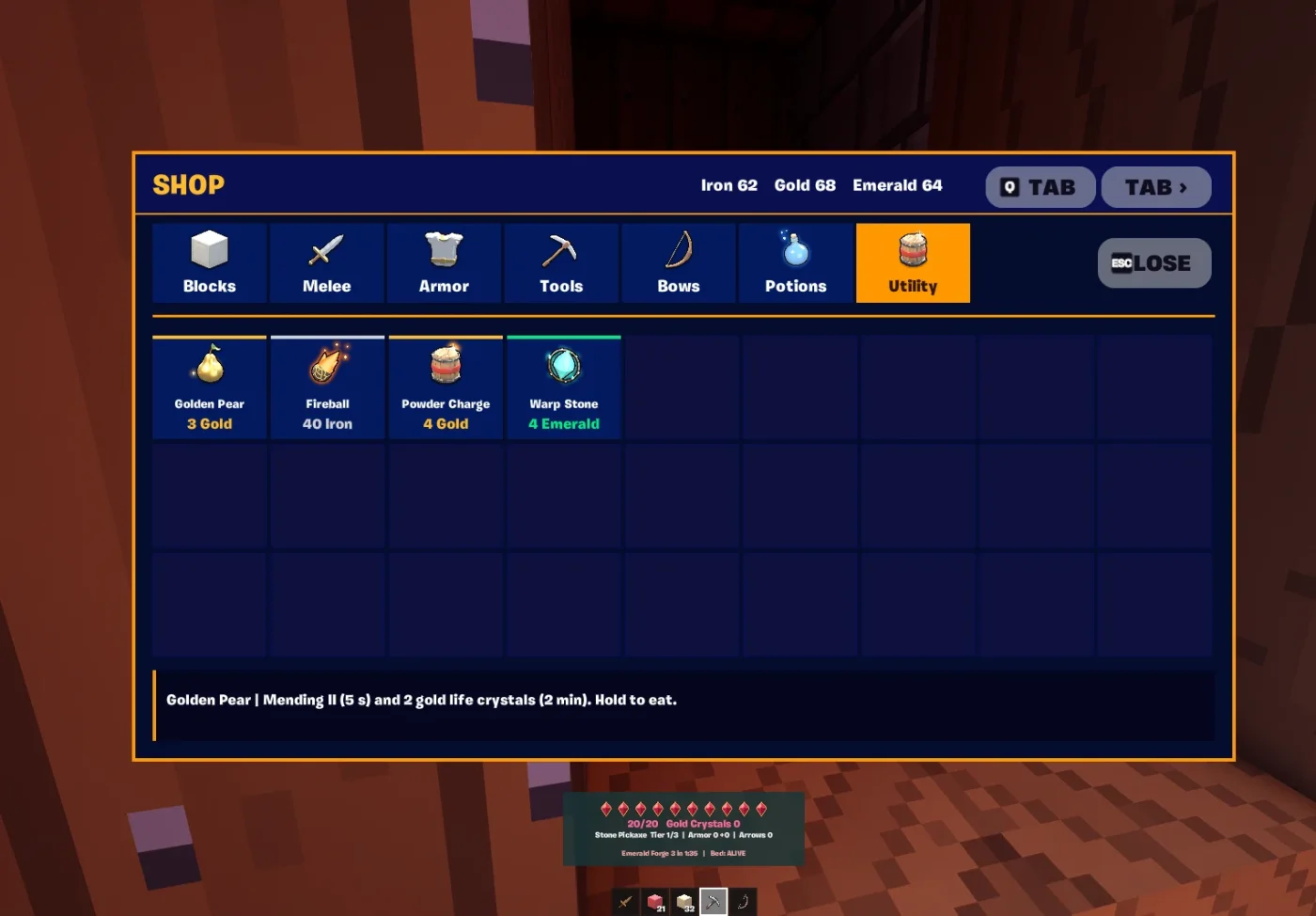
The shop window in release week with theme A: dark blue background, gold borders and the highlighted Utility tab with Golden Pear (3 Gold), Fireball (40 Iron), Powder Charge (4 Gold) and Warp Stone (4 Emerald). The stripe at the top of each card is the currency's colour, and the info field at the bottom explains the selected item. The currency amounts at the top are from the test top-up.

Shop range and prices, and removing the water bucket

The final item list is in bedwars_shop_catalog.verse and the blocks in bedwars_block_catalog.verse. Item identifiers (Id) stay the same across the UI, payments and inventory. The shop's tabs are Blocks, Melee, Armor, Tools, Bows, Potions and Utility, and the upgrade vendor has Upgrades and Traps. Blocks are bought in bundles: Banner Felt (team-coloured felt) 16 / 4 iron, Carved Sandstone 16 / 12 iron, Blast Glass (explosion-proof glass) 4 / 12 iron, Keep Stone 12 / 24 iron, Crate Wood 16 / 4 gold and Bastion Plate (an almost unbreakable armour plate) 4 / 4 emeralds.

Melee: Stone Sword 10 iron (replaces the starting sword, the Wooden Sword), Iron Sword 7 gold, Crystal Sword 4 emeralds and Wind Club 10 gold. The Wind Club is a knockback stick (knockback = the backward flight caused by a hit), which was given a 12-second cooldown on 20 October. During the cooldown a hit does nothing, a notice that the stick is recharging appears on screen and a timer shows on the effects row. Armor: Chain 24 iron, Plate 12 gold and Crystal 6 emeralds; armour is permanent and kept on death. Tools: Shears 20 iron, plus pickaxe and axe in tiers Stone 10 iron, Iron 3 gold and Crystal 12 gold. A higher tier can be bought directly, and death drops the tool by one tier.

Bows: Arrows x8 2 gold, Longbow 12 gold, Reinforced Bow 24 gold (1.75x push) and Wind Bow 6 emeralds (2.5x push). Potions cost one emerald each: Speed Potion (Swift II 45 s), Leap Potion (Leap V 45 s) and Veil Potion (invisibility 30 s, damage reveals). Utility: Golden Pear 3 gold (Mending II 5 s and two golden life crystals for 2 minutes), Fireball 40 iron, Powder Charge 4 gold and Warp Stone 4 emeralds (a teleporting throwing stone, costs 5 health points). Drinking a potion and eating a pear take 1.6 s.

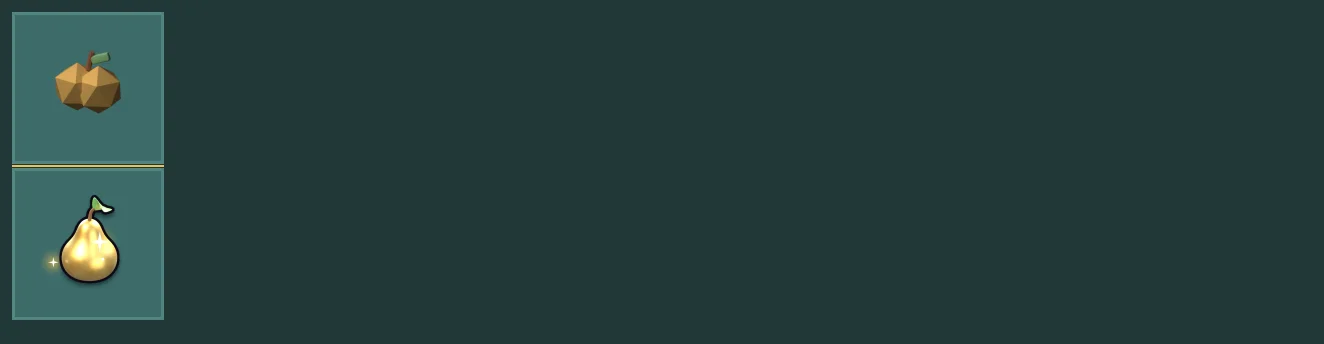
Items have been removed from the range. According to the design document, IDs 18 and 19, ground-moving helpers whose models are later named Mite and Guardian, are not on sale; their icons and models are still in the code. The Counterattack trap (Id 33) was removed on 30 September after playtest feedback, leaving three traps. On 20 October the Golden Fruit became the Golden Pear, because the golden apple resembled Minecraft's golden apple. At the same time the effect names were changed to original ones: Swift, Leap, Veiled, Mending, Mining Haste and Gold Crystals.

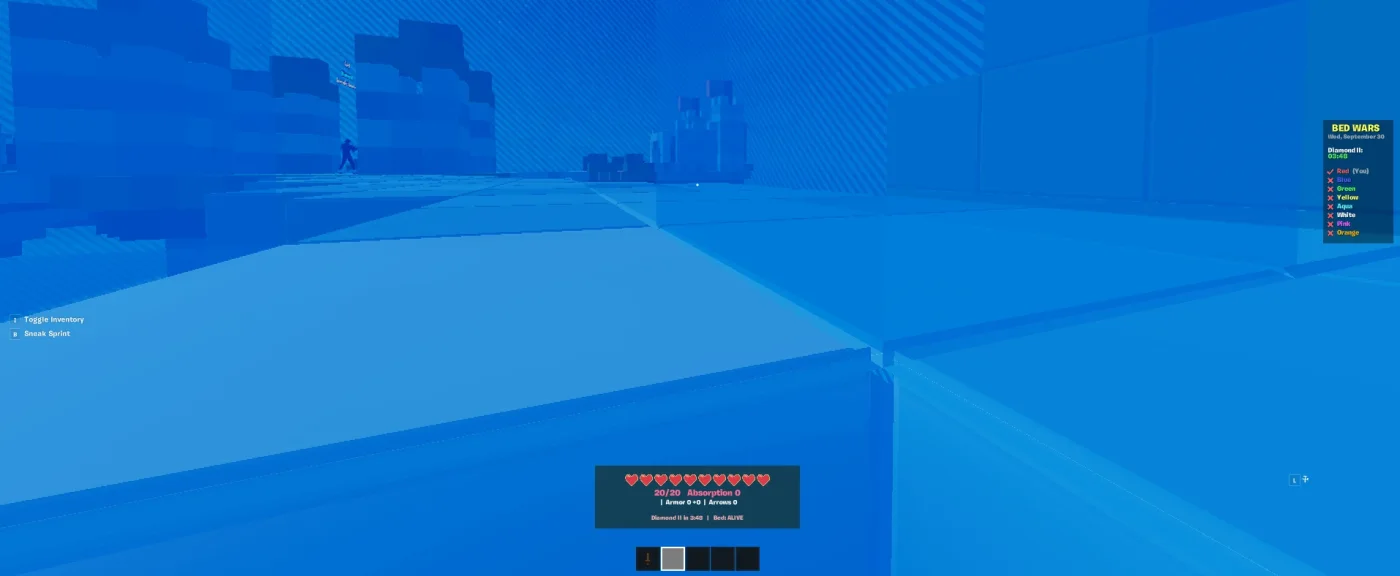
The biggest removal was the water bucket (Water Bucket, Id 23). Water was rewritten on 29 September to be fully event-driven, because the old version recalculated the whole map's water five times a second and lagged badly. On 30 September there was an attempt to make swimming feel like Minecraft: sinking at rest, rising with jump held, and climbing out over an edge. Measurements showed that Fortnite's water device holds the physics character in a dead zone of about 50 cm (from 43 cm below the surface to about 7 cm above it), where vertical velocity is damped to zero, and that a swim jump lifts only about 75 cm, leaving the feet about 64 cm below the edge. After three rounds of fixes the developer decided to give up on water. The bucket was removed from the shop, the swimming changes were reverted from backups, and the measured values were recorded in memory for a possible later attempt. The water code is still in the files, unused.

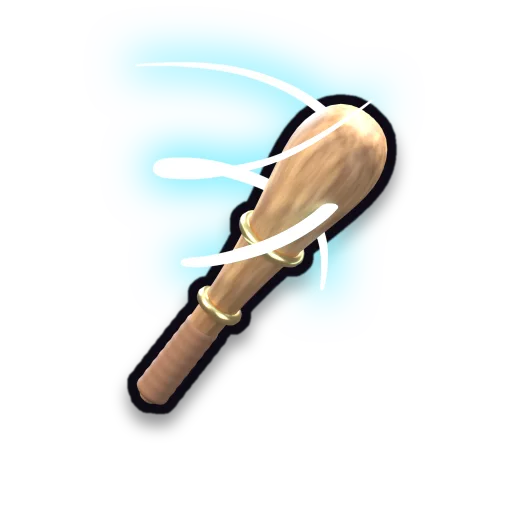
Wind Club shop icon: a wooden club surrounded by wind trails. The stick was given a 12-second cooldown so that it cannot be used to push continuously.
Comparison image: the old angular Golden Fruit icon above, the new rounded Golden Pear below. It shows both the icon style overhaul and the apple being replaced with a pear for copyright reasons.
Gameplay shot in water, with the whole view tinted blue and the player at the highest reachable point of a waterfall. The shot is from the last swimming round before water and the water bucket were removed from the game.

Team upgrades, traps and the UpgradeSuite playtest

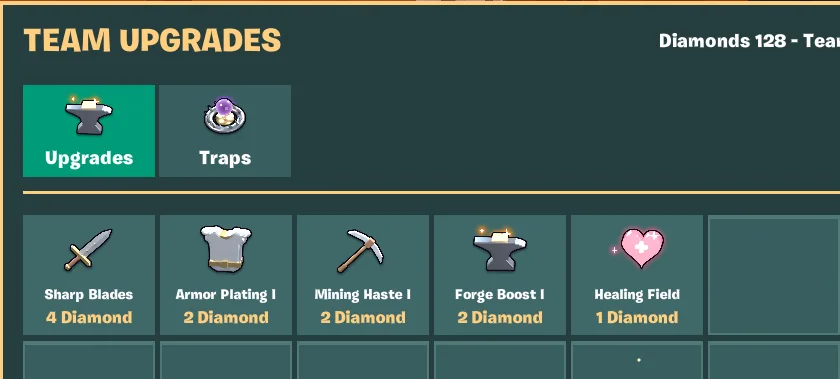
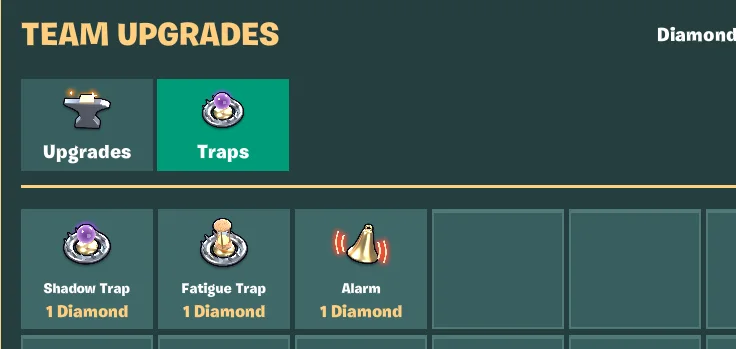
The base's second vendor sells team-wide upgrades for diamonds. Prices were set to Hypixel's level on 29 September. Sharp Blades (4 diamonds) gives the team's swords and axes +1.25 melee damage. Armor Plating I–IV (2/4/8/16) reduces damage taken. Mining Haste I–II (2/4) speeds up mining by 20 or 40%. Forge Boost I–III (2/4/8) speeds up the base generator by +50/100/150%, and at tier III the generator also starts producing emeralds. Healing Field (1) gives Mending I healing within about 8.5 blocks in the home base. There are three traps, and they go into a queue that holds three: Shadow Trap blinds and slows the next intruder for 8 seconds, Fatigue Trap slows the intruder's mining threefold for 10 seconds, and Alarm warns the team and reveals an invisible intruder. A trap's price depends on the queue length: 1, 2 or 4 diamonds.

In the late-September playtest Mining Fatigue, Haste and Healing Field did not seem to work. The code and wiring showed that the effects worked but the player got no feedback from them. So an effects row was added (for example Mining Haste II showing the tier and remaining time), a large notice to the defending team when a trap fires, and a TRAPPED! notice to the intruder. The Orange team's base centre point was missing from the level (BasePoints[7] was zero), which had broken that team's traps and healing; the value was fixed on 29 September.

In October the aim was to be certain that every card works. An automated playtest, UpgradeSuite, was written into bedwars_combat.verse; it starts when the constant UpgradeSuite is set to true. When the match starts, the test gives the player 128 diamonds, teleports them next to the upgrade vendor, buys every card with the real payment devices and measures the effect. The first run passed only 16/50 checks. The fault was in the test: the teleport point landed in the wall of the new castle's shop booth, and the developer was moving at the same time. The teleport point was recalculated 200 cm from the vendor towards the base centre point, and on the next run all 50 checks passed.

Measured results: Sharp Blades +1.25 damage; Armor Plating I–IV dropped the same hit's damage from 7.2 to 2.0; Mining Haste cut block mining from 0.80 seconds to 0.67 and 0.57 seconds; Forge Boost III raised iron output 2.5x and started emeralds; Healing Field gave +1 HP every 2.5 seconds at home; the trap queue filled 3/3, trap prices were 1/2/4, and Shadow, Fatigue and Alarm fired in the enemy base. The trap-fired notice to the defending team could not be tested without a second human player. The test was left in the code switched off (UpgradeSuite = false) so that it can be rerun when upgrades change.

The Upgrades tab of the Team Upgrades menu before the colour theme overhaul: Sharp Blades (4 Diamond), Armor Plating I, Mining Haste I, Forge Boost I (2 Diamond each) and Healing Field (1 Diamond). These are the cards the UpgradeSuite test bought and measured.
The Traps tab of the same menu: Shadow Trap, Fatigue Trap and Alarm, 1 Diamond each when the queue is empty. The price rises to 2 and 4 diamonds as the queue fills.
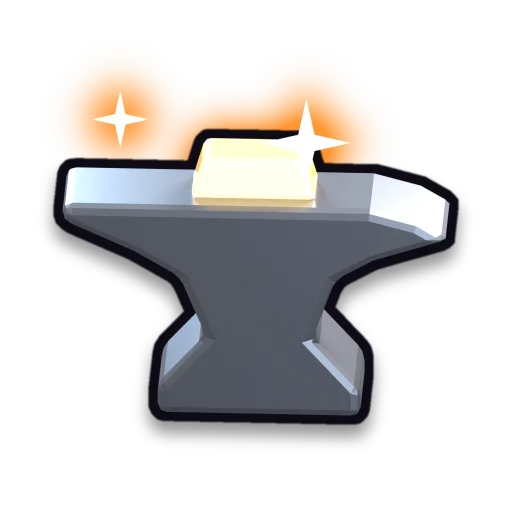
Forge Boost upgrade icon: an anvil with a glowing ingot on top. The same anvil serves as the Upgrades tab icon.
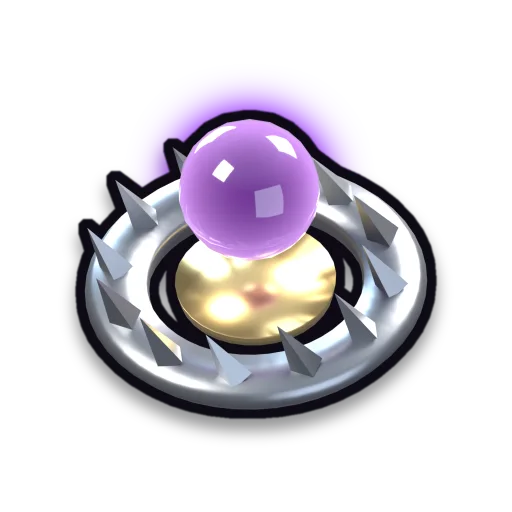
Shadow Trap icon: a spiked ring with a violet crystal orb in the middle. The icon also serves as the Traps tab icon.

Generators: from Fortnite devices to Verse piles

At first Fortnite's Item Spawner devices served as generators, throwing out items continuously (base rates iron 1 s, gold 8 s and emerald 60 s). The 30 September playtest showed that iron and gold came too fast with no cap, the devices flung items onto the walls, and the Forge upgrade did not properly affect them. The base generator was rewritten entirely in Verse (bw_pile in bedwars_combat.verse). The pile sits next to the back wall behind the spawn, three cells behind the vendors' midpoint. Iron comes every 2 seconds and gold every 8 seconds, with caps of 48 iron and 16 gold. Forge III adds an emerald every 60 seconds, up to three. Forge multiplies the iron and gold rate by 1 + 0.5 × tier.

The pile is shown as stacked ingot models (1–4 copies per currency): iron at one end of a dark strip, gold at the other and emeralds in a row by the wall. The player takes the pile by walking within a 140 cm radius and is given only as much as fits in the inventory; the rest stays in the pile. A three-block dark strip was painted into the castle model at the generator, and a gold GENERATOR / IRON & GOLD sign on the wall. The old devices were switched off and their timers parked at an hour's interval. From early October the generators run in all eight bases for the whole match, including on the island of an empty or eliminated team; previously they stopped on an eliminated team's island.

The island generators were moved to the same Verse pile system (bw_island_gen in bedwars_timeline.verse). The counter on the hologram floating above the generator is the generator's own clock, so items appear exactly when the counter hits zero. The diamond generator's rate at tiers I–III is 30, 23 and 12 seconds, and the emerald's 65, 50 and 35 seconds. The caps are 8 diamonds and 3 emeralds. On a full generator the counter keeps running but nothing comes, and no separate Full text is shown. Diamonds are drawn in a ring and emeralds in a triangle, and a player who comes within a 120 cm radius takes the whole pile at once. Generator tiers rise on the timeline: Diamond II 6:00, Emerald II 12:00, Diamond III 18:00 and Emerald III 24:00.

A fourth emerald generator was added to the centre island, and all four were placed in a square 7 metres from the centre point of the diamond generators. This makes every team's trip to the emeralds equally long. When the map was redone in castle style on 11 October, the generator positions were kept, and a gold square frame running through the emerald generators was added to the floor of the centre island's Coronation Court. The holograms (initially 21 billboards, Tier I/II/III, Spawns in N seconds) were rewritten in original wording on 20 October: for example Diamond Forge, Forge level 2 and Next gem in 7s.

Currency from the generators is granted as real Fortnite resources, and this has a cost. When Bed Wars was compared in November with the smoother-feeling game Pillars, the strongest suspect was the constant currency income: after every grant the inventory code corrects the native hotbar, reads the currencies four times a second and checks the hotbar once a second. In the October logs the Bed Wars server had 10–20 times more hitches than Pillars. This was not measured with the generators switched off, so the cause remained unconfirmed.

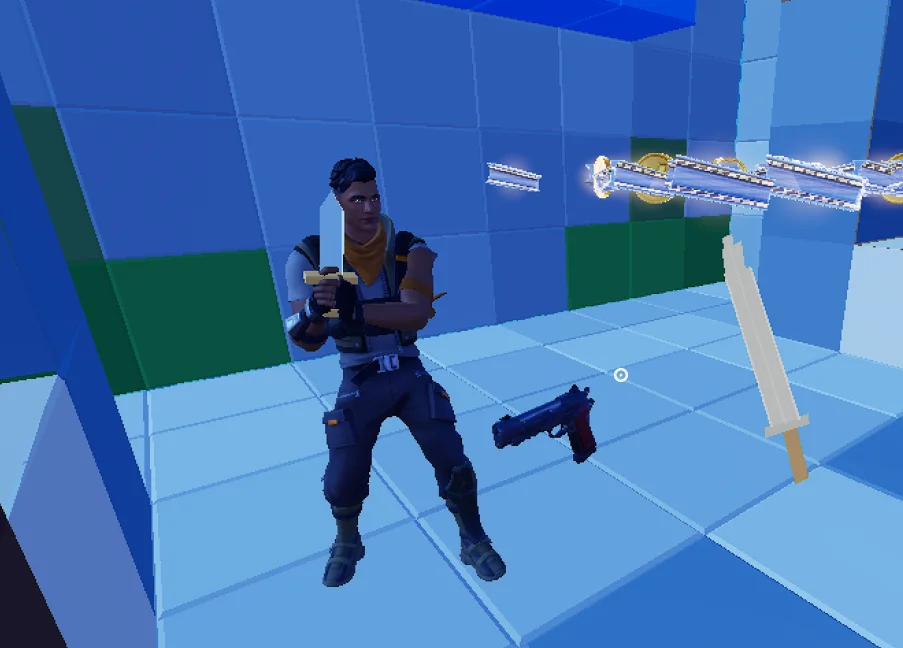
September test shot: a pistol floats next to another player, and in the background along the edge of a wall lies a row of iron and gold ingots flung out by Fortnite's generator device. The shot demonstrated both the native generators' uncontrolled output and the hand-item visibility bug.
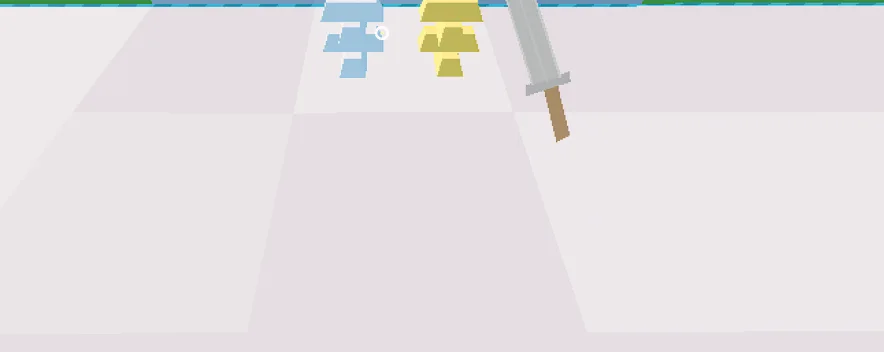
The first Verse generator pile: stacks of iron and gold ingots on a pale floor. The pile's area was later marked with a dark strip so that the generator is recognisable.
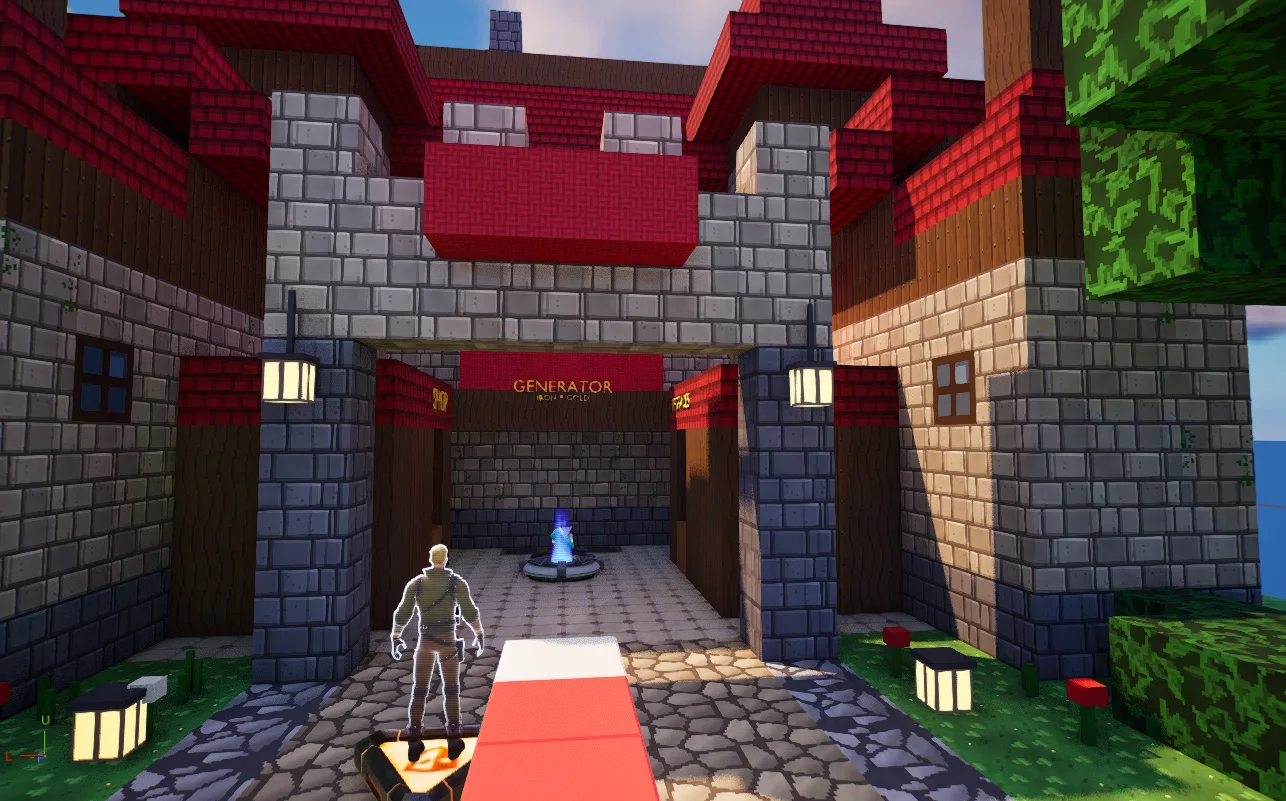
Editor shot of the red base's entrance: at the end of the corridor on the back wall is the GENERATOR / IRON & GOLD sign, and on the sides are the openings of the shop booths. The inner court is a no-build zone, the entrance arch row is not.
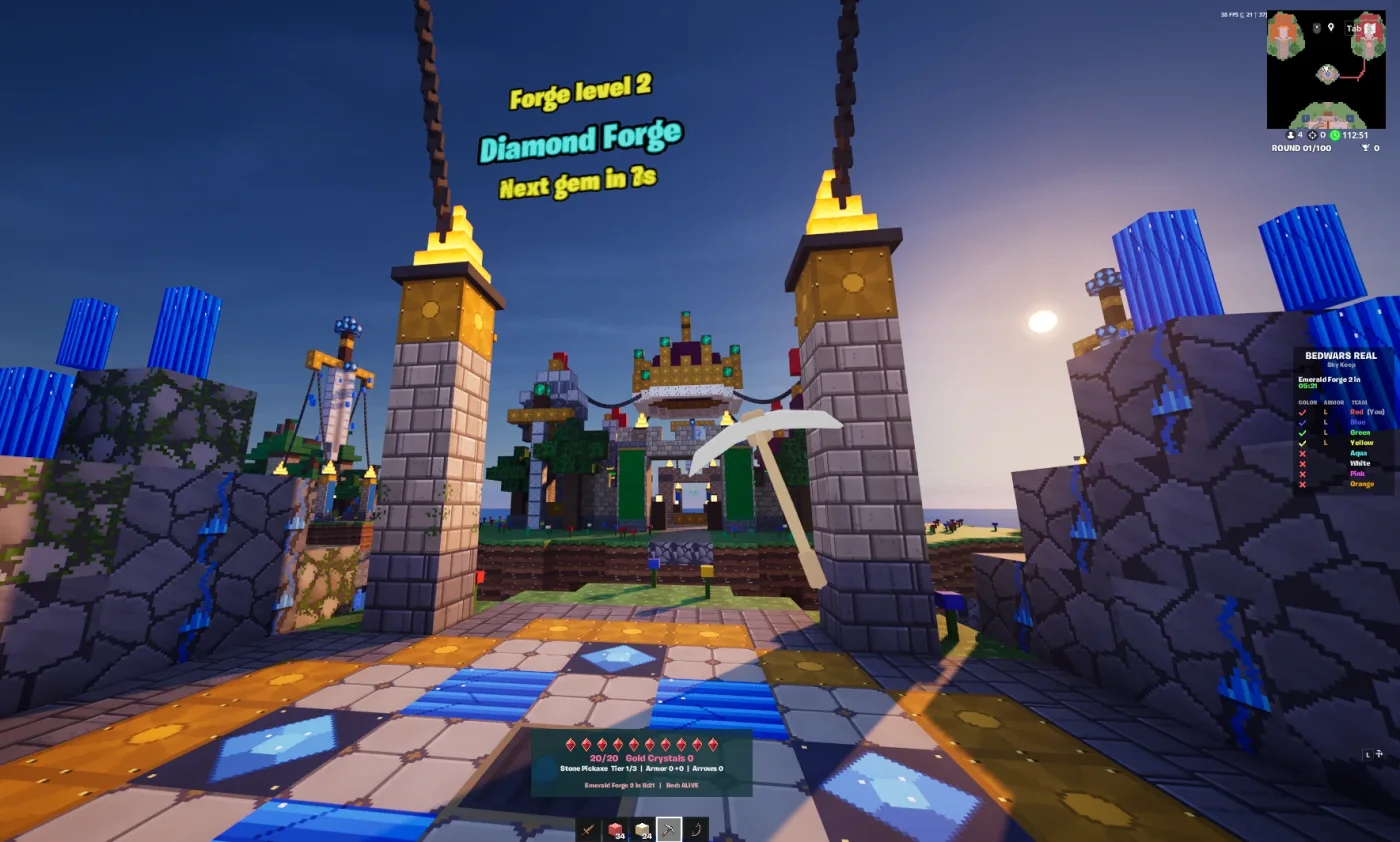
A diamond island gate in game: the hologram reads Forge level 2, Diamond Forge and Next gem in 3s, i.e. the counter shows the generator's own clock. The floor shows sapphire-blue crystal tiles, the sidebar is on the right edge and the life crystals at the bottom.

A custom inventory on top of Fortnite's hotbar

Fortnite's own inventory does not suit Bed Wars, so on 29 September the module bedwars_inventory.verse was written: a Minecraft-style hotbar at the bottom of the screen and an inventory window with 27 storage slots and the hotbar row, DROP and CLOSE buttons, and stacks of up to 64. The source of truth stays in the game's own counters (blocks, bought items, tools and the starting sword), and the inventory only arranges them into 32 slots: slots 0–4 are the hotbar and 5–31 storage. Blocks, arrows, pears, fireballs and powder charges stack to 64, the Warp Stone to 16 and everything else to 1. The first version had nine hotbar slots, but keys 1–9 did not select slots, because Fortnite's default keys work only with its own five-slot hotbar. The hotbar was changed to five slots, and playtesting confirmed that it works.

The custom hotbar is mirrored onto Fortnite's native hotbar. Each of the five slots holds exactly one Fortnite item, either the actual item or an invisible filler, so Fortnite's own slot keys and scroll wheel select the right slot. The native items were first made from Fortnite's pistol template, and the pistol model was removed at runtime. The removal did not replicate to other players, however, so in testing another player's screen showed a pistol. Merely hiding it made the hand item seen by others vanish entirely. The clean solution required an Entity Prefab asset, which MCP cannot create, so the developer made the prefab BW_HandItem in the editor and removed the pistol model from it. Since then only the item's own model shows in hand.

Currencies take up storage space as in Minecraft: they go only into storage slots in stacks of 64 and cannot be moved to the hotbar. On 30 September it turned out that resources that did not fit were left in an invisible queue and appeared later. The hidden queue was removed: currency is granted only as far as there is free space, the generator and the pile on the ground keep the rest, and the player gets a full-inventory notice. Overflow from refunds and chest transfers is dropped at the player's feet, and a safeguard removes any overflow left invisible after one second and drops it on the ground.

A currency stack can be dropped with the DROP button. The drop is charged through the shop's payment button and becomes a pile thrown on the ground (bedwars_pickups.verse). The stack flies about 200 cm forward, the pile shows 1–4 models, anyone within a 130 cm radius picks it up by walking over it after a two-second delay, and it disappears after five minutes. If there is no floor below within 12 metres, the stack falls into the void. This lets a player give currency to a teammate. Purchases are blocked while a currency transfer is in progress, because the transfer reserves the payment button with its own price. Pickup of other items was fixed on 15 October: the Pick up prompt appeared only for blocks, because the item models had no collision shape, which the look trace requires. A collision shape was added to all 37 item models.

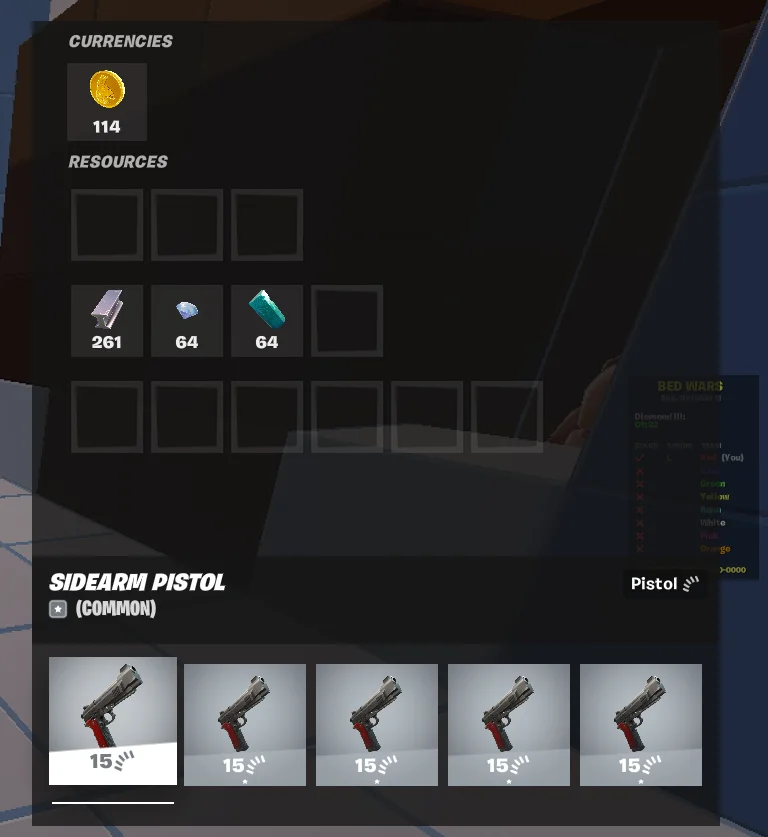
Fortnite's own default inventory, which wrongly opened from the inventory key: Currencies and Resources panels and five pistols on the bottom row. The pistols are the custom hotbar's invisible native items, exposed on this screen.
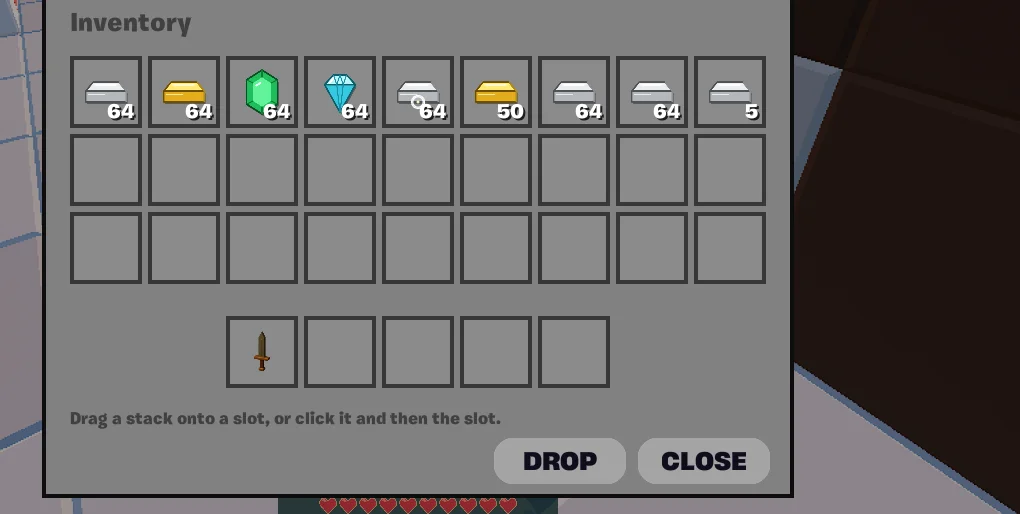
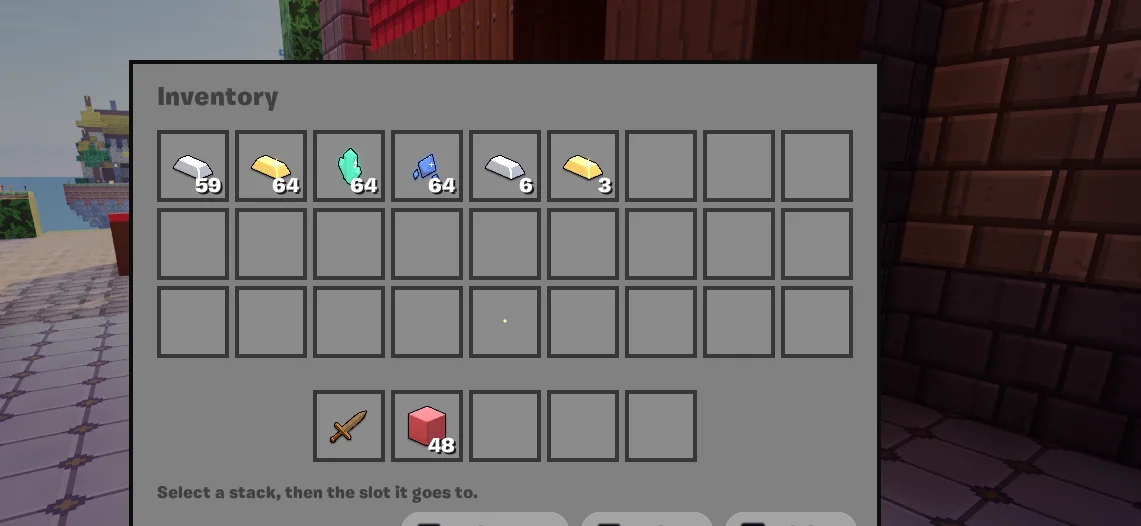
The game's own grey inventory screen in October: 27 storage slots holding iron, gold, emerald and diamond stacks, the five-slot hotbar below with the starting sword, and the DROP and CLOSE buttons. The help text describes the drag-and-click method of the time.

Chests: team chest and Personal Vault

The chests were made on 30 September in the module bedwars_chests.verse. Each base has two chests inside the front edge of the building, on either side of the corridor. They are placed by calculating 400 cm back and 200 cm to the side from the vendors' midpoint, and they open towards the corridor. The team chest has 27 slots like Minecraft's single chest, and it is locked to other teams as long as any member of the team is in the game. The Personal Vault is a personal chest similar to Minecraft's Ender Chest: each player sees only their own contents in it, and it persists through deaths.

Chest cells cannot be built in. A tool's tier is kept in the chest. Currencies are deposited asynchronously through the same payment-button route as dropping: the inventory charges the currency with the payment button, and once the payment is confirmed it moves into the chest. A failed transfer or one that does not fit is returned to the player or dropped at their feet. The inventory's QUICK MOVE function moves stacks between the chest and the inventory like Minecraft's Shift-click. The end-of-game reset (ClearGame) empties the team chests, inventories, upgrades, traps and generators, but permanent stats are kept. The chests' behaviour was not separately recorded as confirmed in game.

Open key, controller and select-then-select

The inventory is opened with the Input Trigger device BW_Inventory_Input, which listens to the Creative input Custom 14 (Toggle Inventory) and consumes the press. On 11 October it was noticed that the inventory key opened Fortnite's own inventory. A diagnostic line showed that the device received not a single press from any key. A Fortnite update and a shift in input numbering were suspected first, but neither held up. Eventually the only difference from the working key devices turned out to be location: all the working devices were at least partly above the height −100 000, but the inventory device was entirely below it (−100 192), where it had been moved when the void was deepened. The device was moved to −99 500 next to the working Shift device, and the custom screen started opening. Depth as the cause is an inference, but the fix worked in playtesting.

With a controller there was no way out of the inventory or shop, because CLOSE was bound to the Back action, but the MenuNavigation input mapping that activates Back was missing. Functions were written in bedwars_ui_keys.verse that add the MenuNavigation and InventoryMenu mappings when a screen opens and remove them when it closes. The close keys are Back and the button that opened the screen: the inventory closes on keyboard with Esc or I and on controller with Circle/B or the inventory button, the shop with Esc or E and on controller with Circle/B or Square/X. Because E closes the shop, tabs are switched on keyboard only with Q. A close within 0.25 s of opening is ignored, and the same screen cannot be reopened until 0.4 s after closing. Controller jitter was inferred to come from the 6 px gaps between slots, where focus jumped to the background button; the slot buttons were widened to fill the 78 px spacing, as were the shop cards, and on controller the background is a plain colour fill.

On 11 October a Minecraft-style drag and drop was built into the inventory from the signals the Verse UI offers, because there are no ready-made drag events or mouse position. Dragging did not suit controllers or phones, however, because Verse does not report whether a button is held while a screen is open and offers no directional key events. On 12 October dragging was removed and replaced with the same select-then-select flow for all devices. A press picks up the stack (gold frame), the stack is shown small in the corner of the focused slot, and a second press puts it down; the same item merges and a different item swaps places. Pressing the same slot or Back returns the stack. QUICK MOVE (Triangle/Y, F on keyboard) moves a stack between the hotbar and storage or between a chest and the inventory, and Square/X drops the focused stack. Moving from slot to slot relies on Fortnite's own menu navigation, and its speed cannot be adjusted from Verse.

On 14 October the hotbar number keys sometimes pointed to the wrong item after death. Fortnite most likely remembered the selected slot and placed the items starting from it on respawn, and Verse can neither set an item's slot nor read the number keys. The fix: an item is no longer removed and re-added when the contents change; instead the same native item's model, icon and name are swapped in place (Reskin). In addition, Fortnite's own order is read on build and once a second (Realign), and the custom hotbar adapts to it. The fix worked in playtesting.

The inventory in release week with the new icons: iron, gold, jade-green emeralds and sapphire-blue diamonds in storage, a sword and 48 blocks in the hotbar. The help text describes the select-then-select flow. The 64-count stacks also exposed the test wallet saved into the level (see the final implementation).

Sidebar and HUD

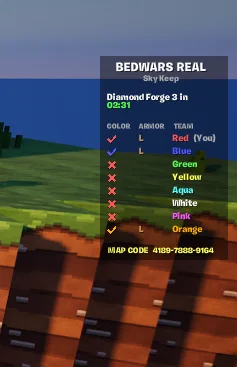
On 29 September a sidebar was made on the right edge of the screen in bedwars_sidebar.verse: title, date, the next event with its countdown, and all eight teams. A team-coloured ✔ means the bed is standing, a number gives the remaining players after the bed is destroyed, a red ✘ marks an eliminated team, and one's own team is marked (You). The symbols were drawn in-house. On 30 September the rows got the headers COLOR · ARMOR · TEAM and an armour code: L, C, P or Cr (Leather, Chain, Plate, Crystal) based on the team's best player still in the game, plus the Armor Plating tier I–IV, for example P IV. A MAP CODE row was added at the bottom, its value held in a single constant, BWMapCode. The placeholder 0000-0000-0000 is not shown, and the real code 4189-7888-9164 was set after release. The title changed from BED WARS first to BEDWARS REAL / Sky Keep (2 November) and finally to BEDWARS / The Origin (7 November).

The bottom panel holds health, status (tool tier, armour, arrows), the effects row and the next event. The effects row added on 30 September shows effects with name, tier and time, such as Healing Field or the Wind Club cooldown. Large titles announce key moments: ALARM TRIGGERED! and TRAP TRIGGERED! for defenders, TRAPPED! for the intruder, BED DESTROYED! for the team that lost its bed, and ALL BEDS DESTROYED! and BORDER CLOSING! for everyone. The winner sees a large gold VICTORY! text. Fortnite's own HUD and inventory feed are hidden.

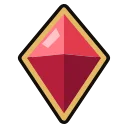
In the 20 October copyright pass the HUD hearts were replaced with original life crystals: a ruby-red rhombus with a gold border in full, half and empty states, plus a golden version. The golden extra health was named Gold Crystals. The Hypixel-style wording in the holograms and sidebar was also rewritten in original words.

The sidebar on release day before the last rename: title BEDWARS REAL / Sky Keep, next event Diamond Forge 3, the COLOR, ARMOR and TEAM columns, ✔ and ✘ symbols, armour code L and MAP CODE 4189-7888-9164. The title was afterwards changed to BEDWARS / The Origin.
Full life crystal: a gold-bordered ruby-red rhombus that replaced the HUD's Minecraft-style hearts. One crystal represents two health points.

Final implementation and the release wallet bug

In the released game the economy is split as follows. bedwars_shop_catalog.verse contains the item list, prices, hint texts and icons (T_UI2_, T_UI3_ and T_UI4_ textures), and bedwars_block_catalog.verse the block names, prices, bundles and mining times. bedwars_combat.verse handles purchases, team upgrades, traps, effects, the HUD panel, the base generator piles and the UpgradeSuite test. bedwars_timeline.verse handles the island generators, holograms and tier increases. bedwars_inventory.verse contains the 5+27-slot inventory, the native hotbar mirroring, currency reading and transfers, bedwars_chests.verse the team chests and Personal Vaults, bedwars_pickups.verse dropped items and currency piles, bedwars_ui_keys.verse the menu keys, and bedwars_sidebar.verse the sidebar, map code and VICTORY text.

For testing, a test wallet, PlaytestWallet, had been made on 29 September that filled up the currencies at the start of every life (first 500 iron, gold and emerald plus 64 diamonds, later 64 of each). On 2 November it was changed in code to a constant that is always off. After the 7 November release, the inventory in a test session still held 64 of each currency. A log line revealed the cause: the field's old value true had been saved into the level back in October, and Fortnite loaded it over the code default even though the field was no longer editable. The field was renamed PlaytestTopUp, so the old value no longer maps to it. The same bug was most likely present in live version 1, and the fix went into Release 2.

Bedwars: The Origin was released on 6–7 November 2026 with island code 4189-7888-9164. In bot matches (for a player who joined alone, after a one-minute wait) the economy works the same way, but no stats accumulate.

Key values

WhatValueWhat it affects
Base iron2 s / item, cap 48Base rate of the Verse pile at the back-wall generator; Forge multiplies the rate by 1 + 0.5 × tier.
Base gold8 s / item, cap 16Same clock as iron; Forge speeds it up in the same proportion.
Base emerald (Forge III)60 s / item, cap 3Starts only after Forge Boost III.
Pile pickup radius140 cm (base), 120 cm (islands)The player takes as much from the pile as fits in the inventory.
Diamond generator30 / 23 / 12 s, cap 8Tiers I–III; four generators, one on each diamond island.
Emerald generator65 / 50 / 35 s, cap 3Tiers I–III; four generators in a square 7 m from the centre point.
Generator tier increases6:00 / 12:00 / 18:00 / 24:00Diamond II, Emerald II, Diamond III and Emerald III on the match timeline.
Forge Boost2 / 4 / 8 diamonds+50 / 100 / 150% to the base generator; measured, Forge III = 2.5x iron output.
Armor Plating2 / 4 / 8 / 16 diamondsTiers I–IV; in the test the same hit's damage went 7.2 → 2.0.
Mining Haste2 / 4 diamondsMining 20 / 40% faster; measured 0.80 → 0.67 → 0.57 s.
Sharp Blades4 diamonds, +1.25 damageThe whole team's swords and axes.
Healing Field1 diamond, +1 HP / 2.5 sWorks in the home base within about 8.5 blocks.
Trap price and queue1 / 2 / 4 diamonds, at most 3Price rises with queue length; Shadow 8 s, Fatigue 10 s ×3 mining time.
Wind Club cooldown12 sAfter a hit the stick does not push until the time has passed.
Speed modulator multiplier1.764Base speed 1.26 × Speed II 1.4, because speed effects do not stack.
Inventory slots5 + 27Slots 0–4 hotbar (mirrored to Fortnite's 5-slot hotbar), 5–31 storage.
Stack sizes64 / 16 / 1Blocks, arrows, pears, fireballs, powder charges and currencies 64; Warp Stone 16; others 1.
Currency reads4 times per secondReadCoins reads Fortnite's resource amounts from the payment devices; hotbar check once per second.
Dropped currencythrow 200 cm, pickup 2 s / 130 cm, lifetime 5 minMinecraft-style sharing with a teammate.
Menu guards0.25 s and 0.4 sA close within 0.25 s of opening is ignored; reopening blocked for 0.4 s after closing.
Inventory input deviceZ −99 500Entirely below −100 000 (−100 192) the device received no presses.
UpgradeSuite50/50 PASS (20 Oct)Automated playtest for all 8 upgrade and trap cards.

Final state

In the released game currencies come from Verse-driven piles: in the bases iron every 2 s and gold every 8 s (caps 48/16, Forge III emeralds 60 s / 3), and on the diamond islands and the centre island's four emerald generators piles whose counter is the generator's own clock (caps 8/3). The shop runs on purchase tickets and dynamic payment buttons with theme A, and all eight team upgrade and trap cards passed the playtest 50/50. The custom 5+27-slot inventory, the five-slot hotbar, select-then-select moves and the post-death hotbar order worked in playtests, and the inventory opens with the Custom 14 key. The water bucket, Counterattack and the ground-moving helpers have been removed from sale. Live version 1's inventory most likely contained the 64-count top-up from the test wallet saved into the level; the fix (PlaytestTopUp) was awaiting Release 2 review. Left open: the trap-fired notice to defenders (requires two human players), separate in-game confirmation of currency dropping, chests and controller close keys on more devices, and the suspicion that the constant currency income and hotbar corrections cause server hitches; this was not measured.

Next chapter: Game flow & lobby →